

The Complete Guide to Ranking in AI-Driven Search Engines
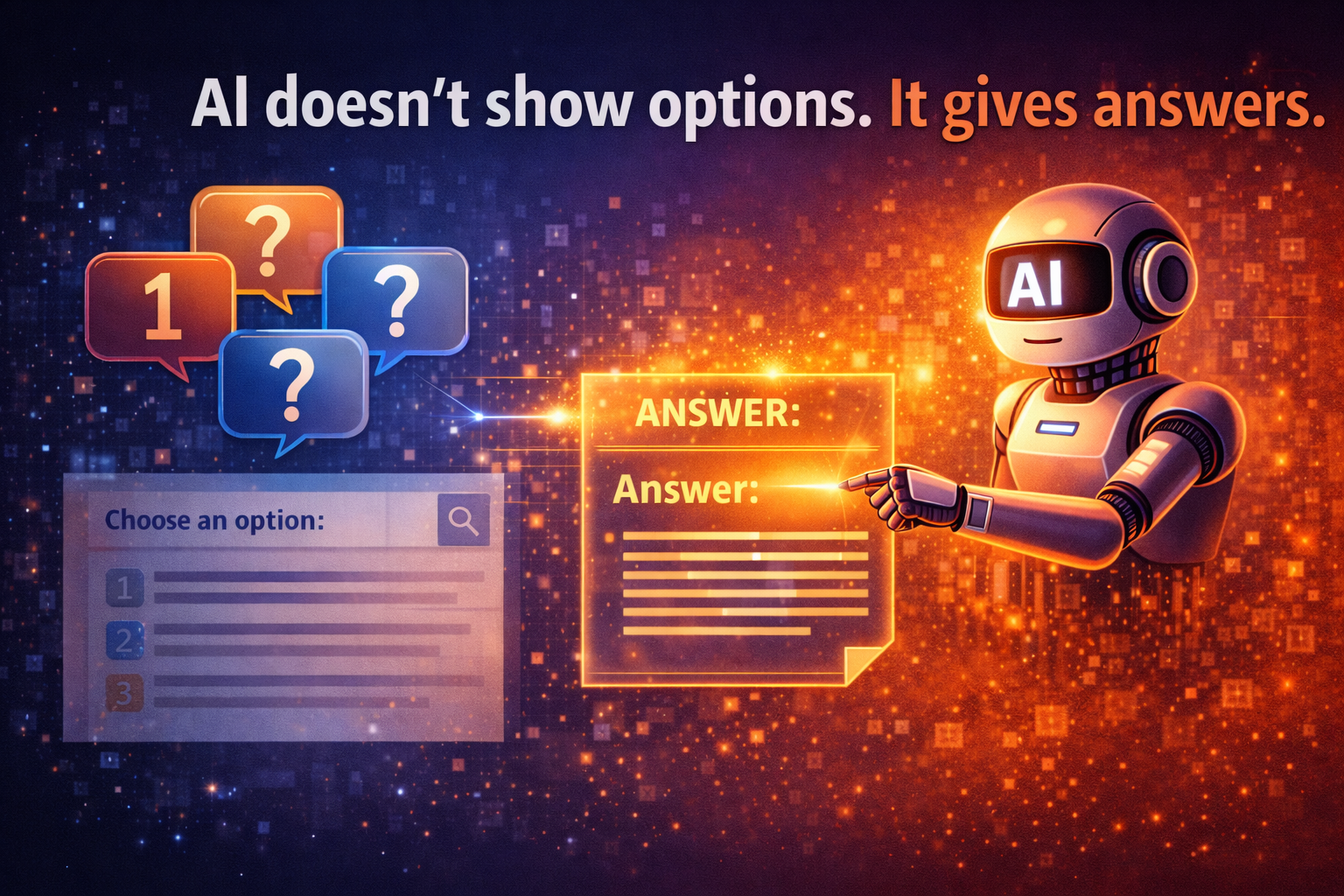
Ranking on search engines, especially to stand tall on page one, is a thing of the past.
That mental model no longer holds.
Today, people are just as likely to ask ChatGPT, Google’s AI Overview, or Perplexity a question as they are to type it into a traditional search bar. In many cases, they don’t even click a website. They read the answer, form an opinion, and move on.
This is where generative engine optimization comes into play.
It’s not about replacing SEO. It’s about adapting it for a world where answers matter more than rankings.
AI-Driven Search: Why It’s Different
The working of AI-driven search engines is different from classic search engines, as they don’t rank pages and allow users to decide; instead, they:
- Understand a question
- Filter information from various resources
- Present a single summarized response
That response often includes:
- Brand mentions
- Comparisons
- Recommendations
- Definitions and explanations
If your brand is not part of that source pool, you’re invisible, no matter how well your pages rank.
This is the core shift that generative engine optimization addresses.
What Is The Focus Of Generative Engine Optimization?
Traditional SEO is based around keywords and links, whereas generative engine optimization works by understanding how AI models filter information, understand trust, and reutilize the information.
In a practical way this means optimizing for:
1. Questions, not keywords
AI systems respond to prompts like
-
- “Which option is better?”
- “How does this work?”
- “What should I choose?”
2. High priority on clarity
Clear and simple explanation beats marketing-heavy copy every time
3. Structured answers
Well-organized content with direct answers is far easier for AI to quote.
4. Consistency across your site
Conflicting messages confuse AI models and reduce trust.
This is where an AI SEO service differs from conventional SEO work. The goal isn’t just traffic; it’s citation and inclusion.
How Brands Actually Rank in AI-Driven Search Engines
In an AI-backed search engine, ranking is not about a single formula; it is a combination of multiple signals networked together:
Here’s what consistently makes a difference:
1. Intent-Based Content, Not Volume-Based Content
AI models heavily favor informational and comparison-based content. Pages that help users in decision-making by explaining concepts clearly and comparing options are more often prioritized as compared to promotional pages.
2. Answer-First Page Structure
AI-generated responses usually target pages that position a clear and direct answer near the top before jumping into detail.
3. FAQ-Led Depth
FAQs mirror how people naturally ask questions. This makes them one of the most effective formats for AI discovery when written properly (plain language, no fluff).
4. Trust Signals Built Into Content
This includes:
- Neutral tone
- Practical explanations
- Clear authorship or brand authority
- Links between related topics that reinforce expertise
5. Presence Beyond Your Website
AI models learn from forums, community discussions, knowledge hubs, and trusted third-party platforms. Brands that participate thoughtfully in these spaces often gain stronger AI visibility.
What Is the Role of Traditional SEO Then?
This question constantly comes to the mind of digital marketers: to have clarity on the role and function of traditional SEO in the current times. So let’s be clear that generative engine optimization does not work in a silo without SEO fundamentals.
Your site still needs to be:
- Crawlable
- Fast
- Easy to navigate
- Structurally sound
But the above-mentioned are only baseline expectations. You will not get a prize for having them, but you will get ignored if you don’t have them.
A meaningful and robust AI SEO service builds on this and prioritizes keeping AI-specific optimization on top, concentrating on how information is analyzed and not just only on indexing.
The aim is to get chosen and not just get found.
AI-driven search that happens on LLMs: users don’t browse on the links; instead, they are provided a summarized answer.
That means the real competition is no longer “Who ranks #1?”
It’s about which website the AI trusts.
Business owners who understood this formula have benefited by gaining visibility.
Frequently Asked Questions (FAQs)
What is generative engine optimization?
Generative engine optimization can be understood as a method under which content is optimized so that it can be trusted, understood, and cited by AI-powered search engines like Gemini, Claude, ChatGPT, and Perplexity, and not just get ranked as it used to happen in traditional search results.
What is the difference between Generative Engine Optimization and SEO?
The goal of generative engine optimization is to provide answers, citations, and brand mentions to users. On the other hand, SEO focuses only on clicks and rankings.
SEO builds visibility; GEO builds influence.
Does website traffic reduce under AI-powered search?
In some of the cases like informational traffic, it may reduce However, it should be noted that the traffic that comes through here is usually of higher intent because users trust the brands and organizations mentioned in the LLM response.
What kind of content is best for AI-powered search engines?
Comparison content between two products, informational guides, terminology or subject explainers, glossaries, and meaningfully written FAQs provide amazing results because they exactly match how people ask questions.
Are FAQs really helpful for AI visibility?
Oh yes! FAQs match the conversational prompts used in AI search. If the prompts are written clearly with a product or service in mind, they are best for AI systems to filter and reuse content.
How can an AI SEO service help with this change?
A pro AI SEO service assists product and service brands. Shift to the content, structure, strategy, and ideation for AI-backed discovery. Going ahead with rankings to ensure inclusion in AI-generated answers.