

How LLM SEO Optimization Is Transforming Content Strategy for Indian Digital Agencies
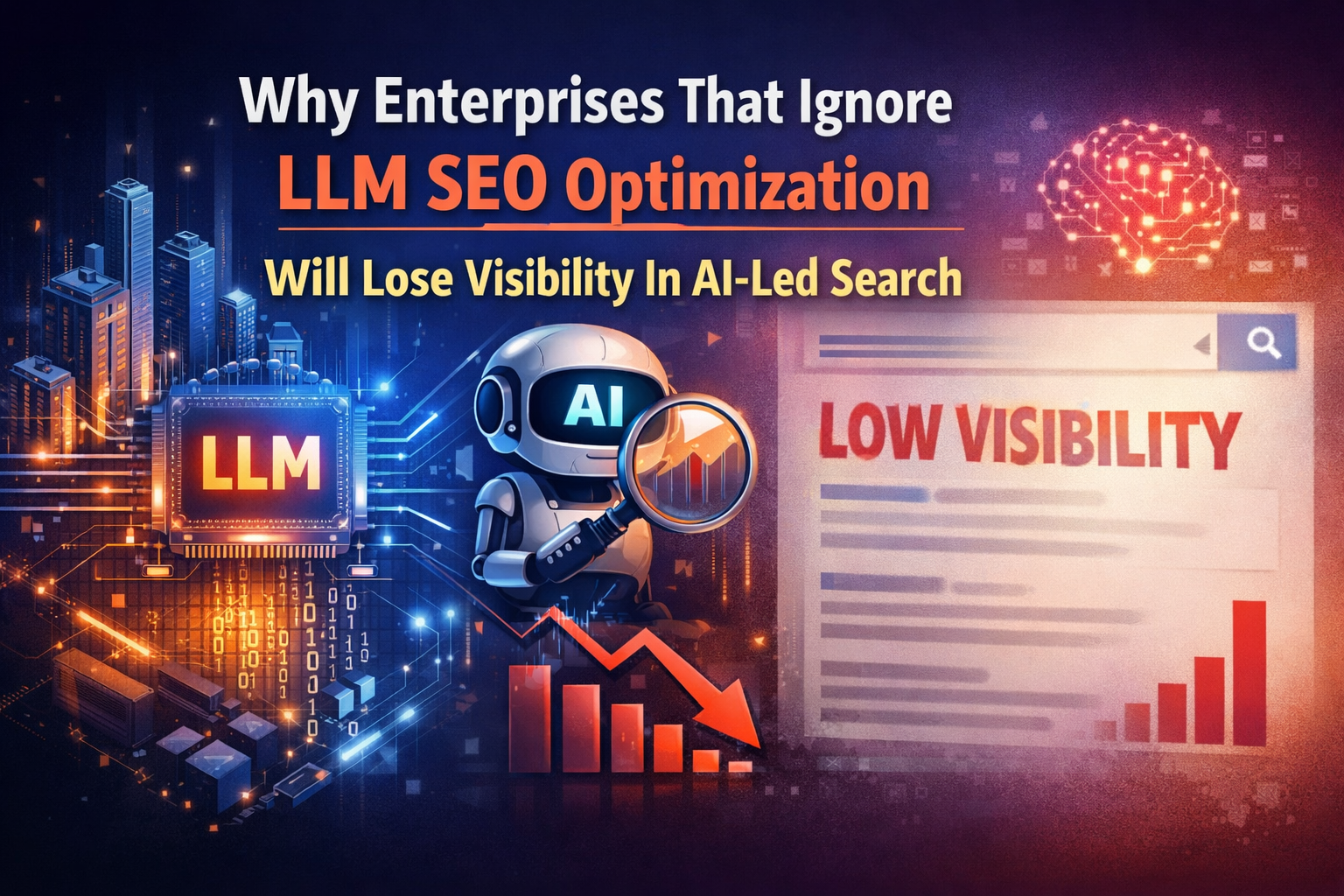
Content strategy has always been tethered to this familiar goal: Optimize and rank well on search engines, drive qualified traffic to the site, and convert visitors once there. This paradigm is about to be disrupted. In the year 2026, an increasingly larger portion of discovery, comparison, and decision-making occurs inside the AI-built answer, and sometimes even before clicking the result—a process that doesn’t necessarily include visiting the search results page.
From the observations that TechShu has made, these developments represent a paradigm shift. This change does not represent a gradual progression but a move that alters the dynamics in terms of planning, structuring, and managing content. The new approach to Search Engine Optimization by LLM is no longer being looked at from a future perspective, but is setting new definitions for the future itself.
The Decline of Content Created Primarily for Search Engine Optimization
Classic SEO methods are founded on keywords, rankings, and page-level metrics. They are based on the principle that being visible means receiving a visit. That does not work for Large Language Models.
LLMs have different evaluation mechanisms when it comes to content. They focus on making content clear, consistent, and trustworthy. The mechanism of displaying ten blue links has been replaced by the synthesis of answers based on sources that the LLM finds trustworthy and consistent. Optimized content, which only considers SEO, will still be ranked but won’t impact the responses created by AI.
This is where AI SEO truly transcends traditional optimization and enters the realm of a new kind of strategy discipline.
Impact of LLM SEO Optimization on Content Strategy
LLM or AI SEO optimization practices stress that agencies need to think about content in terms that are relevant to how AI comprehends information, not just how search engines organize it. The focus now is less on keywords and more on intent.
- Intent buckets, not keyword lists – informational, hybrid, and transactional questions have distinct functions in AI searches
- Answer-focused formats, in which important answers are defined and highlighted to enable AI-based extraction
- Narrative consistency, with all official brand pages providing the same view of the facts.
- Trust indicators such as structured FAQs, schemas, and validation pathways to establish trust
This represents a paradigm shift in how content has been planned in the SEO sector. The long pages written with the intention of ranking are no longer sufficient. The content needs to explain, clarify, and validate, sometimes even prior to the user visiting the website.
The strategic risks the enterprise must no longer over
Speaking from experience at TechShu regarding AEO and AI SEO, rather than passing shopper volume as the risk, the risk not accounted for by LLM SEO optimization may be that of lost credibility regarding decisions made earlier on.
With the increasing involvement of AI assistants in comparing, explaining, and recommending:*
- There may be a risk of the category of the enterprise being defined by other people
- AI narratives are influenced by competitors just through being more clear and coherent.
- Brand subject matter expertise can decay quietly without noticeable performance issues
- Re-entry into AI-led Discovery becomes successively harder over time
This problem becomes even more serious when it comes to large Indian companies with complex product offerings, markets, or regulated content. This is since LLMs, without an organized content framework that can be understood by AI, have challenges understanding the brand structures, offerings, and public stances.
How Mature Agencies Are Responding
At TechShu, we don’t believe AI SEO and LLM SEO optimization are parallel tracks. This is the kind of change we are seeing among the top digital agencies meant for the Indian market – the integration of content systems, which establishes the foundation of SEO and the credibility of the search engine result due to the LLM SEO optimization.
In this category,
- Technical readiness for search engines and AI crawlers
- Content architecture based on intent rather than just the use of keywords
- Structured data and FAQs for AI-friendly citation purposes.
- Continuous tracking of the visibility of AI at the level of the prompt, and not just the rank
The measurement process continues to develop. The key to success is measured by AI mentions, story integrity, assisted conversions, and quality sessions impacted by AI-powered discovery, not just traffic.
Setting a New Standard for Enterprise Content Strategy
LLM SEO enhancement is not a trend superimposed upon the traditional world of search engine optimization. Rather, the paradigm shift represents a fundamental structural shift within content creation. For businesses that persist in being strictly governed within the traditional model of search engine optimization, the danger is not one of failed implementation. Rather, the danger is one of being made irrelevant in the world of AI-led discourse.
What happens in 2026, though, is the beginning of content being irrelevant to AI if it’s not optimized for artificial intelligences’ ability to interpret that content. Those who realize this early place themselves in the role of strategic partners to help brands remain seen, trusted, and understood in the current state of search.
The question that enterprises must now ask is no longer “whether its content is ranked,” but “whether, in answering critical questions, the voice of the enterprise is heard in the answer.
FAQs
What is the contrast between the optimization of an LLM for SEO and general SEO optimization techniques?
Traditional SEO is focused on rankings or traffic. LLM SEO optimization is focused on whether AI systems can understand, believe, and reproduce your content. When brands solely depend on traditional SEO, there is a risk that you will rank high but will not be cited in AI-based answers where decisions begin.
In what ways are Indian digital marketing agencies applying the capabilities of LLMs?
The major agencies are rearranging their content based on the guidelines of AI SEO – answer-driven content, intention-driven architecture, and trust indicators. The agencies that fail to do so continue to post content on the website that is compliant with SEO guidelines, which the AI algorithms bypass.
Optimized content for LLMs: Does it rank higher in Google/AI-powered search results?
Yes. LLM-optimized content is simply more understandable and well-structured and comes from a trusted source---this gets rewarded not only be Google but by AI algorithms. Non-LLM-optimized content can rank well regardless but will be less and less important for AI-related discovery and searching.
What challenges do Indian digital marketing agencies face when implementing LLM SEO optimization?
The greatest difficulty is that of unlearning conventional strategies for SEO. When there is lack of proper governance, trust deficiency is created by AI-based SEO projects. Those agencies that defer this shift may end up as executional vendors, instead of becoming strategic ones.