

AI SEO vs Traditional SEO: What Works in 2026?
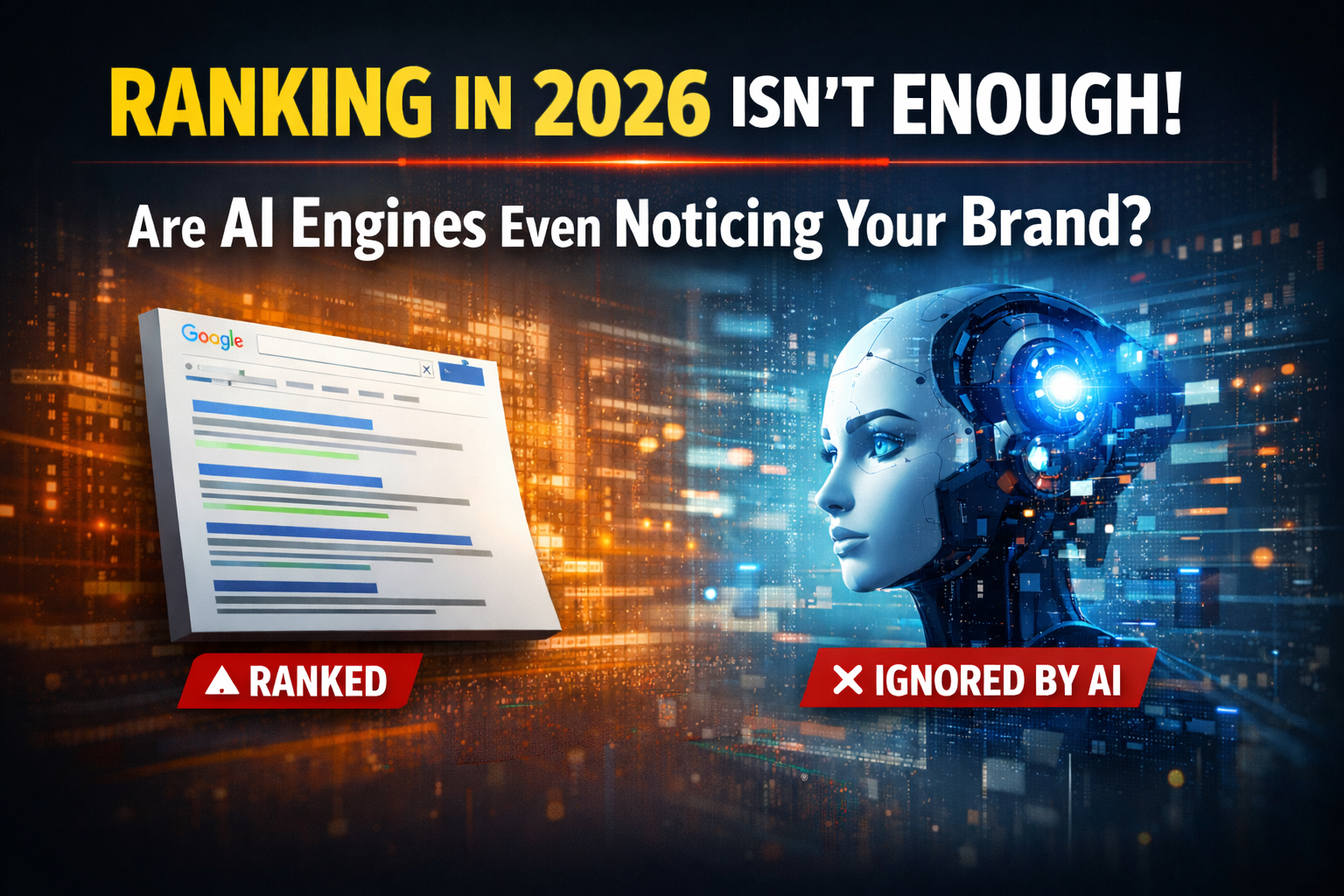
The process of search has embarked on its most dramatic transformation in decades. Looking ahead to 2026, for enterprise brands that have long faced decisions involving ranking within Google results versus building scalable content, it’s no longer merely about being ranked within Google results—it’s about being validated, referenced, and trusted by answer engines fueled by artificial intelligence. Conventional SEO remains an element of relevance; however, by itself, it isn’t sufficient anymore.
The unpleasant reality of the situation is that Brands using traditional SEO methods could still appear at the top of the search engine results page, but they will be conspicuously absent from the decision-making level. When your brand doesn’t show up in the conversations your AI assistants use to answer important business inquiries, it’s not a question of competing—you’re being left out.
This marks a point where discussion transcends SEO. AI SEO, or answer engine optimization, has become the missing link in town that makes a distinction between a site being merely indexed and a site being trusted. For big business, losing traffic has become a reality of losing relevance and influence, without even realizing it.
AI SEO (AEO) – Optimizing for Being Cited
AI SEO, otherwise known as “AEO services,” essentially means optimizing content for how large language models retrieve, assess, and cite information.
A good answer engine optimization company operates beyond rankings and visits. The attention is on:
- Content organization within easily quotable answer formats
- Mapping content to types of informational, hybrid, and transactional prompt intent
- Increasing the strength of the brand’s ”Truth sets”, ensuring the AI systems understand one version of the truth
- Search engine optimization to make data readable to AI systems using schema, FAQs, and brief answer blocks
- Providing visibility on search indexes and AI-driven tools
The measurement of success in AEO is different. It does not measure only clicks. As an AEO agency, we believe it also measures AI citations, view level by prompt, narrative level accuracy, and assisted conversion based on AI discovery.
Established SEO: The Foundation Remains
Nevertheless, because of the emergence of AI-driven discovery, classical SEO is still very relevant and necessary for modern web development. Proper building blocks of tech-oriented web properties, like crawlability, indexability, page loading speed, and data structural organization, continue to form the groundwork for web visibility and promotion.
However, in 2026, SEO will merely solve one question: Can search engines access your content?
This is not a guarantee of your brand being picked or cited by AI models.
Enterprise-level SEO on current trends encompasses:
- Intent-based content organization, not content organized around keywords.
- Pillar and cluster architecture for effective information hierarchy
- Informational and hybrid content instead of mere transactional pages
- Brand stories told consistently across every owned online asset
SEO earns credibility. Credibility by itself is not enough for AI results.
Why Enterprises Need SEO + AEO Together
“The most effective approach in 2026 will not be AI SEO vs. traditional SEO – it will be SEO + AEO.”
This foundation for search engine optimization, known as “technical strength,” “structured content,” or “discover
AEO further extends this foundation by helping content get turned into the authoritative answers that AI models trust.
With Enterprise Brands, this means that all of this is brought together to
- Presence despite a decline in informational traffic
- More expertise with AI-based recommendation queries and comparison questions
- High-quality interactions based on intent rather than volume
- Resilience against future shifts in search behavior
It is for this reason that major companies have started teaming up with a dedicated AEO agency that fully comprehends classical SEO and AI-driven discovery systems.
What Works in 2026
By 2026, it will no longer be the case that the greatest level of visibility is reserved for those who rank highest. As an answer engine optimization agency, we strongly predict that visibility will belong to those who get referred to most often by AI. Sticking only with SEO will marginalize your visibility chances and going forth with only AEO services will experience a change of a short-lived visibility.
The winners are those businesses whose answer engine optimization is a strategic aspect of SEO, not a replacement for it. By optimizing for content, trust signals, and technical readiness, they make sure their authority is apparent, regardless of what the visitor does.
For enterprise executives, “Are we ranking?” has become a less pressing question. The main question now is: Is artificial Intelligence responding to our customers’ queries by citing our brand name?
Want to know more about how to benefit from AEO services? Send us your queries along with your details by clicking here, and our team will get back to you.
FAQs
Is AI SEO Better Than Traditional SEO Techniques In 2026?
Yes to influence. The classic SEO may rank high on search engine results, but without answering engine optimization, enterprises are faced with being invisible in AI-responses while conclusions are drawn. The enterprises could rank high but not be mentioned.
Can traditional SEO be effective without AI tools?
Not entirely. With classic SEO, brands can gain traffic, but without AEO, brands are not involved in the process of AI-driven discoveries, comparisons, and recommendations, which, with the passage of time, leads to the reduction of influence despite the unchanged position.
How do search engines rank AI-generated content in the year 2026?
Search engines optimize content for accuracy, organization, and trust. Unmanaged AI content can cause credibility degradation. With or without answer engine optimization, highly ranked content can be overlooked by AI systems in favor of content that is clear, consistent, yet not massive.
What could be the risks of dependence on purely AI SEO strategies?
Uncontrolled AI use creates inconsistency in facts, dilutes authority, and erodes trust. If not built on a strong foundation with proper SEO fundamentals and AEO services, AI content will quickly harm visibility much faster than it will build it—and usually without warning signs.
Should businesses combine AI SEO with traditional SEO to ensure better rankings?
Absolutely. Enterprises that fail to combine traditional SEO with answer engine optimization face a growing visibility gap. Those that integrate both protect the rankings and secure AI citations, while others quietly lose relevance in AI-led search.